From Campaign Execution to AI-Driven Growth Systems
Digital Marketing Shift 2026 isn’t changing anymore; it’s changing its structure.
The rules that have governed digital marketing for more than ten years are being changed as we head into 2026. Artificial intelligence, automation, and answer-driven platforms are changing how people search, how visible material is, how users make decisions, and how performance is measured.
SEO rankings, bought traffic funnels, and campaign-based execution that used to work well are now giving less and less back. The industry is moving into a “systems first” era, where success is based on intelligence, trust, and the ability to adapt.
What Has Changed in Digital Marketing Shift 2026?
There isn’t just one upgrade or platform that prompted the change. It is the outcome of three forces acting at the same time to change the ecosystem:
- Search and discovery powered by AI taking the place of conventional browsing.
Zero-click behavior is cutting down on direct website visits:
- Automation making execution a common good
- These forces are changing how people find, rate, and choose brands.
- It’s not about results anymore; it’s about answers.
- Search engines are changing into engines that give answers.
- AI systems now do more than only show a list of links:
- Figure out what the user wants
- Put together information
- Give short answers
- This affects the way digital marketing works at its core.
- Being on the first page doesn’t ensure visibility anymore.
- AI systems now care more about being mentioned than being clicked.
This is why Answer Engine Optimization (AEO) is becoming a key part of digital marketing. It focuses on structural clarity, entity authority, and machine-readable trust signals.

How Zero-Click Effect Changes Marketing KPIs?
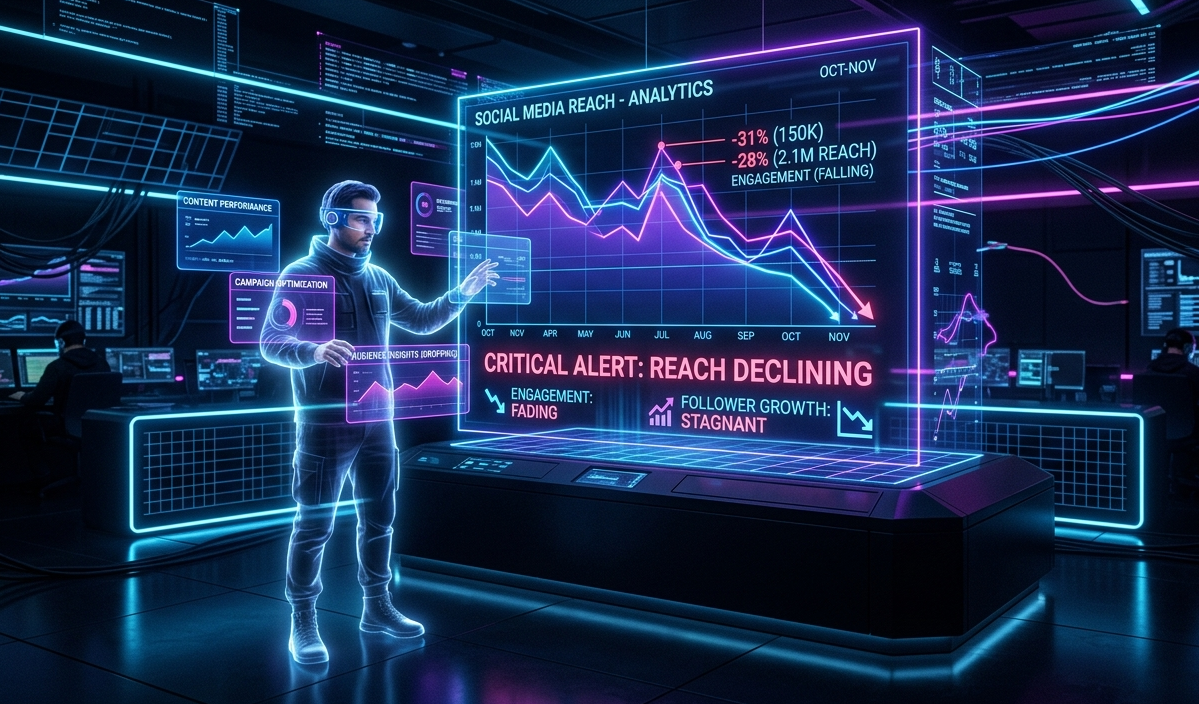
A growing number of people finish their excursions without clicking on any links to websites. This behavior goes against standard ways of measuring achievement in Digital Marketing Shift 2026, such as:
- Meetings
- Views of the page
- Rates of click-through
In 2026, the best ways to measure digital marketing success are:
- Brand recall in AI responses
- Visibility at the decision stage
- Speed of conversion after the initial exposure
- Signals of trust and authority
- The goal is no longer traffic.
- Preference is.
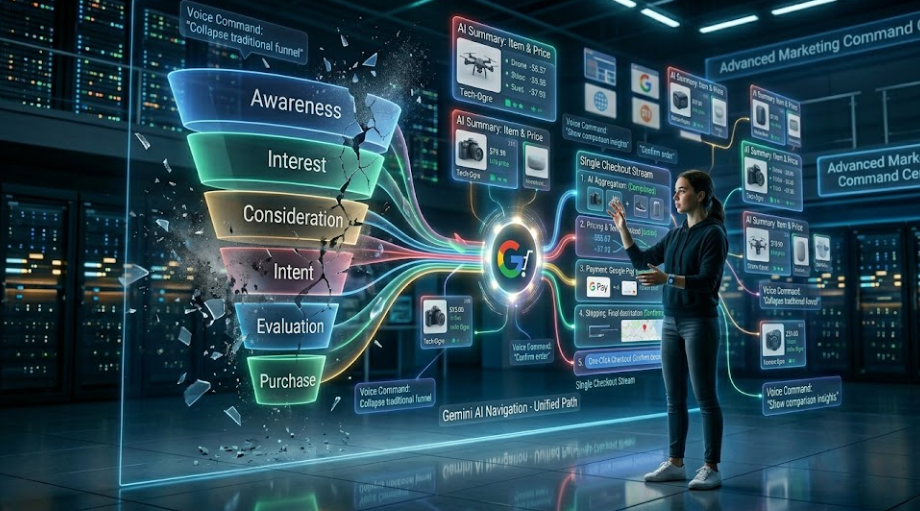
Adaptive marketing systems are taking the place of funnels. Linear funnels thought that users traveled from one step to the next. But modern user behavior shows differently.
People who use it now:
- Enter at different times
- Right away, compare
- Get help from AI to make decisions faster
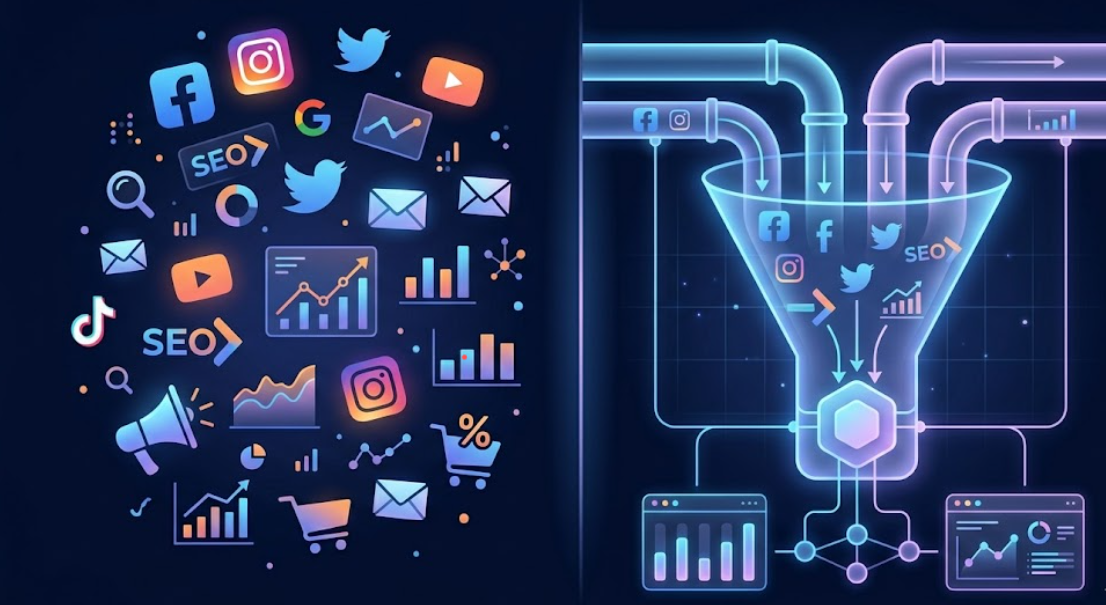
Because of this, digital marketing is moving away from funnel architecture and toward adaptive growth systems, which are environments that change based on purpose instead of following set patterns.
How campaigns make spikes happen?
Systems make growth happen again and over again. How well AI systems interpret content is becoming more and more important for its visibility.

Machines Now Check Content Before People Do
AI looks at:
- Structure and clarity
- Topical depth
- Reliability and usefulness
- Signals of authority
This is the change from information that is only creative to material that is computational—stuff that machines can read, trust, and summarize while still being useful to people.
How Paid Media Is Losing Control Over Growth?
Ad-only methods are becoming less effective because ad expenditures are going up and people’s attention is going down.
Brands that only use paid media face:
- Costs of acquisition are higher
- Less retention
- Less trust
On the other hand, authority-driven brands, which teach and lead conversations, gain from:
- Less reliance on ads
- More brand loyalty
- Long-term visibility in AI systems
Digital marketing is moving away from being about interruption and more toward being about teaching and persuading.
Communities Become a Valuable Marketing Tool
Algorithms are important to audiences. Communities compound separately. In 2026, brands are spending money on:
- Channels you own
- Communities that are private
- Ecosystems and newsletters
These assets lower the risk of the platform and encourage long-term participation, making community development a key digital marketing strategy instead of just a social one.
What is BuzzMora Insight on Digital Marketing Shift 2026?
In 2026, digital marketing will move from techniques that require a lot of work to systems that are based on intelligence.
It’s apparent that the change is happening:
- SEO → AEO
- Traffic → Trust Funnel → System
- Campaigns → Growth that builds on itself
It’s not about doing more with digital marketing anymore. It’s about making places where growth is easier. Brands that shift early will get more attention, trust, and preference, even while platforms keep changing.

What Digital Marketing Shift 2026 Means for Businesses?
To be successful at digital marketing shift 2026, you need to:
- Content structures that AI can read
- Positioning based on authority
- System-based funnels that can change
- Metrics that are in line with trust and making decisions
People who are still only optimizing for clicks risk becoming invisible.
BuzzMora TechNews Summary : Digital Marketing Shift 2026
Digital marketing shift 2026 is now working in a new way. In 2026, digital marketing success relies less on being clicked and more on being picked by AI systems.
Even as user behavior and platforms change, AEO keeps companies visible, trusted, and preferred. Brands that get this change won’t pursue algorithms; algorithms will choose them.
AEO FAQs: Digital Marketing Shift 2026
Q1. What is AEO in Digital Marketing Shift 2026?
AEO, or Response Engine Optimization, is the process of making material such that AI-driven response engines can properly understand, trust, and cite it instead of just ranking it in regular search results. Instead of keyword density, it emphasizes clarity, organization, entity authority, and utility.
Q2. What sets AEO apart from SEO?
SEO makes material better so that search engines can find it, while AEO makes content better so that AI systems may choose it as a straight solution. In AEO, visibility depends on authenticity and structure, not merely backlinks or rankings.
Q3. What makes AEO essential in 2026?
In 2026, search engines will use AI summaries and overviews to give answers directly. As zero-click behavior grows, brands need to optimize for being mentioned by AI instead of just getting people to visit their websites.
Q4. Is AEO the same as SEO?
No. AEO does not remove SEO, but it modifies its priority. SEO helps people find things, while AEO decides if AI systems trust, summarize, and show content.
Q5: How does zero-click search affect online marketing?
Zero-click search cuts down on direct traffic, but it makes brand memory and authority more important. People may not go to a website, but they will still remember and prefer brands that AI answers often mention.
Q6: What kind of content does AEO like best?
AEO likes content that is well-organized, factual, short, and comes from a reliable source. AI understanding and selection are better when headlines are clear, answers are direct, concepts are well-defined, and the complexity of the issue is consistent.
Q7: In a world driven by AEO, how should brands figure out if they are doing well?
AI visibility, brand recall, decision-stage influence, and conversion speed are better ways to measure success than just pageviews or click-through rates.
Q8. Are old-fashioned marketing channels still useful in 2026?
In 2026, traditional linear funnels don’t work as well. Users enter at different phases and make faster decisions with AI support. Instead of predefined funnel phases, brands increasingly use adaptive systems.
Q9. Can AEO and sponsored advertisements still operate together?
Yes, but sponsored advertising Digital Marketing Shift 2026 functions best when they are used with content that is based on authority. Ads make things more visible, while AEO establishes trust and long-term preference that makes you less reliant on paid acquisition.
Q10. What will be the largest error firms make in digital marketing in 2026?
The worst thing you can do is to optimize for traffic and rankings and not for AI understanding, authority, and trust. Brands that don’t change risk becoming invisible, even if they have great products.