The Coming Inflation Wave: Why Rising Costs Will Reshape Marketing Strategy in 2026
Inflation Impact on Marketing 2026 is not just an economic headline anymore.
It’s becoming a marketing problem.
As costs rise globally — from ad spend to operations — businesses are entering a phase where:
Growth is harder.
Margins are tighter.
Decisions matter more.
This is not just about surviving inflation.
It’s about understanding how it will reshape marketing systems in 2026.
Rising Costs Are Breaking Traditional Marketing Models
Inflation is impacting businesses across multiple layers:
- Advertising costs are increasing (higher CPC & CPM)
- Customer acquisition is becoming expensive
- Operational budgets are tightening

At the same time:
Consumers are spending more cautiously.
This creates a dangerous combination:
Higher costs + lower conversion intent
BuzzMora POV
The old model:
Spend more → Get more
Is no longer reliable.
In 2026:
AI Efficiency is replacing scale as the growth driver.
Consumer Behavior Is Becoming More Intent-Driven
Inflation Impact on Marketing 2026 changes how people buy.
Users are now:
• Comparing more
• Researching deeply
• Delaying decisions
Impulse buying decreases.
Intent-based buying increases.
What This Means
- TOFU becomes less effective
- MOFU and BOFU become critical
- Trust becomes a deciding factor
BuzzMora POV
Inflation Impact on Marketing 2026 is shifting from:
Attention-driven → Decision-driven
Which means:
Your content must not just attract it must justify the purchase.
Paid Ads Are Becoming Less Predictable
With rising costs and cautious users:
- CAC is increasing
- ROAS is fluctuating
- Ad performance is becoming unstable
Many brands are experiencing:
High spend → Low return
BuzzMora POV
Paid ads are not failing —they are being misused in inflationary conditions.
In this market:
- Ads amplify existing demand
- They don’t create it

Which means:
Without strong awareness and trust,
paid ads become burn rate.
The Shift Toward Owned Growth Channels
As paid acquisition becomes expensive,
brands are moving toward:
- SEO & AEO
- Content marketing
- Email ecosystems
- Community building
Why?
Because owned channels:
- Reduce dependency on paid media
- Build long-term equity
- Improve ROI over time
BuzzMora POV
Inflation is accelerating the shift from:
Paid growth → Owned growth systems
This is where:
AI + Funnelism becomes critical
AI Is Becoming a Cost-Efficiency Engine
One of the biggest responses to Inflation Impact on Marketing 2026 is:
Automation
Businesses are adopting AI to:
- Reduce content production costs
- Optimize ad performance
- Improve decision-making
But there’s a mistake many are making:
Using AI for volume, not efficiency.
BuzzMora POV
AI should not increase output it should increase precision.
Winning brands will use AI to:
• Target better
• Optimize faster
• Reduce waste
Marketing Is Moving from Growth to Profitability
In previous years:
Growth at any cost was acceptable.
In 2026:
Profitability is back.
Brands are now focusing on:
• LTV (Lifetime Value)
• Retention over acquisition
• Conversion optimization
BuzzMora POV
The new equation:
Growth = Revenue – Inefficiency
Which means:
Every part of the funnel must perform.
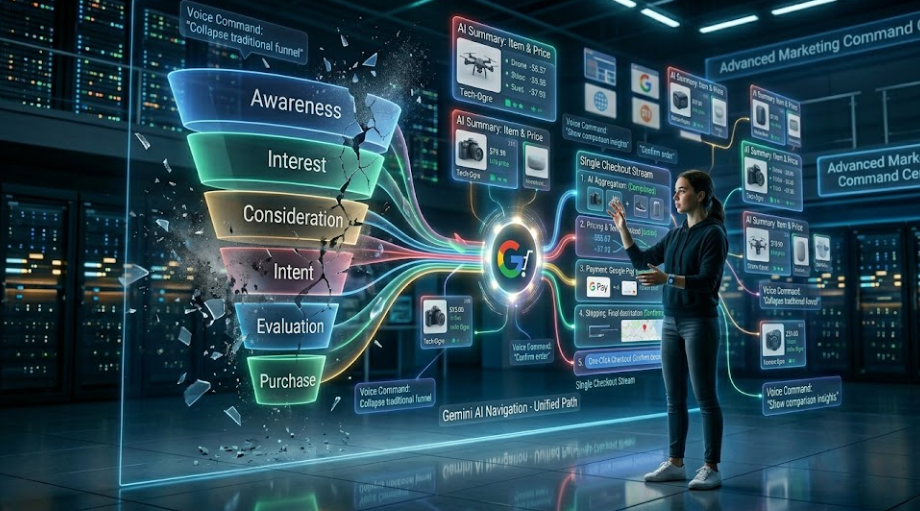
The Rise of Funnel-Centric Marketing
Inflation is exposing weak marketing systems.
Brands without:
- Clear funnels
- Defined user journeys
- Conversion pathways
Are struggling the most.
BuzzMora POV
This is the moment where:
Funnel-based marketing becomes non-negotiable
Because:
• You can’t afford wasted traffic
• You can’t rely on randomness
• You need predictable outcomes
What Businesses Should Do Now Inflation Impact on Marketing 2026?
To navigate inflation effectively:

1. Focus on High-Intent Users
Stop chasing volume —
target users ready to convert.
2. Strengthen Middle & Bottom Funnel
Invest in:
• Trust-building content
• Case studies
• Conversion-focused messaging
3. Reduce Dependency on Paid Ads
Balance with:
• SEO / AEO
• Content systems
4. Use AI for Optimization, Not Noise
Focus on:
• Efficiency
• Targeting
• Performance improvement
5. Build Long-Term Marketing Systems
Not campaigns — compounding systems
BuzzMora Strategic Insight:
Inflation Impact on Marketing 2026 is forcing to evolve in three key ways:
1. Efficiency Over Scale
Spending more is no longer sustainable.
2. Intent Over Attention
Quality of users matters more than quantity.
3. Systems Over Campaigns
Consistency beats short-term spikes.
Conclusion – Inflation Impact on Marketing 2026
Inflation is not just increasing costs —it is increasing expectations.
Brands must:
• Spend smarter
• Target better
• Convert stronger
Because in this environment:
Only efficient systems survive.
The rest will continue spending without seeing results.
FAQs – Inflation Impact on Marketing 2026
How does inflation affect marketing in 2026?
Inflation increases advertising costs, reduces consumer spending, and forces businesses to focus on efficiency, ROI, and conversion-driven strategies.
Why are paid ads becoming less effective during inflation?
Because acquisition costs rise while consumer intent decreases, making it harder to achieve profitable returns without strong funnel systems.
What is the best marketing strategy during inflation?
A combination of AI-driven optimization, funnel-based marketing, and investment in owned channels like SEO and content.
How can businesses reduce marketing costs during inflation?
By using AI for efficiency, targeting high-intent users, optimizing funnels, and reducing dependency on paid ads.
What role does AI play in inflation-driven marketing?
AI helps automate processes, improve targeting, and reduce waste, making marketing more cost-efficient.