AI, Infrastructure & Policy Are Converging — And Businesses Should Pay Attention
2026 isn’t just another year of AI Policy tech conferences. It’s a structural inflection point.
Across Dubai, Europe, Asia, Doha, and Spain, major global IT events are not simply showcasing innovation — they are shaping the infrastructure, governance, and direction of the next digital decade.
From enterprise AI acceleration to telecom policy frameworks and scalable engineering systems, the conversation has shifted.
- This isn’t about tools anymore.
- It’s about systems.
At BuzzMora, we don’t just track events.
We analyze what they signal for businesses, growth teams, and digital ecosystems.
Here’s what four major 2026 events reveal about where technology — and opportunity — is heading.
GITEX AI Asia 2026 – Dubai (April)

The Enterprise AI Acceleration Hub
Dubai has been positioning itself as a global technology bridge between East and West — and GITEX AI Asia is becoming one of its flagship signals.
This event focuses heavily on:
- Enterprise AI transformation
- Government-led AI strategy
- AI-powered smart city ecosystems
- Cloud + AI infrastructure
- Startup and enterprise collaboration
But here’s the deeper insight:
AI is no longer experimental. It’s operational. Enterprises are no longer asking: “Should we try AI?”
They’re asking: “How do we scale AI securely, profitably, and responsibly?”
That distinction matters.
- The first wave of AI was about experimentation.
- The second wave is about integration.
- The third wave — which we are entering — is about competitive advantage.
For growth-focused brands, this means:
- AI-driven marketing automation
- Predictive customer journeys
- Intelligent demand forecasting
- Dynamic pricing systems
- Real-time personalization
At BuzzMora, we see this shift clearly. AI is moving from “creative assistant” to “growth infrastructure.” Events like GITEX confirm it.
Microsoft AI Tour 2026 – Europe & Asia
AI Is Becoming Default in Enterprise Workflow
Microsoft’s global AI Tour signals something critical:
AI Policy is embedding itself directly into everyday work environments.
Through:
- Copilot integrations
- AI-enhanced productivity tools
- Cloud-native AI solutions
- Cybersecurity intelligence systems
- Enterprise-grade automation frameworks
Microsoft isn’t launching experimental tools. It’s redesigning workflow architecture.
That means AI will soon be standard in:
- CRM systems
- Customer service automation
- Data analysis dashboards
- Internal collaboration platforms
- Development pipelines
Here’s the BuzzMora perspective:
When AI Policy becomes default infrastructure, businesses without AI integration become slower, more expensive, and less adaptive.
In marketing specifically, this translates into:
- Higher customer acquisition costs
- Slower campaign iteration
- Poor personalization
- Weak data intelligence
The companies attending these tours aren’t exploring AI.
They’re operationalizing it.
ITU Plenipotentiary Conference 2026 – Doha (Nov 9–27)
AI Policy Shapes Innovation
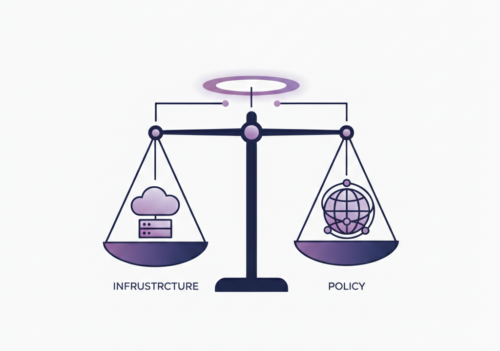
While AI conferences grab headlines, policy conferences shape reality.
The ITU Plenipotentiary Conference focuses on:
- Global ICT standards
- 5G and emerging 6G frameworks
- Digital governance
- Cross-border data policies
- Telecom infrastructure
It might sound technical.
But policy decisions here affect:
- Data privacy regulations
- International digital trade
- Cybersecurity standards
- Infrastructure investment
- Global connectivity expansion
Here’s the strategic lens:
Innovation without regulation creates chaos. Regulation without innovation creates stagnation.
2026 is about alignment. Businesses expanding globally must now think beyond marketing and product.
They must think:
- Compliance readiness
- Infrastructure scalability
- International data governance
- Cross-border operations
At BuzzMora, we always say:
Digital growth isn’t just about visibility.
It’s about sustainability.
Policy events like ITU determine the environment your digital growth operates within.
J On The Beach 2026 – Spain (Oct 29–30)
Engineering Still Wins
AI dominates headlines.
Policy dominates governance.
But engineering dominates performance.
J On The Beach focuses on:
- Distributed systems
- Cloud-native architectures
- Backend scalability
- Resilient infrastructure
- Modern development systems
Here’s the reality:
AI tools mean nothing without stable architecture.
Growth campaigns fail when:
- Servers crash
- APIs break
- Systems cannot scale
- Data pipelines collapse
Scalability is silent. Until it breaks.
At BuzzMora, we believe marketing performance is directly tied to infrastructure performance.
If your backend cannot handle demand spikes, your growth strategy collapses under its own success. Engineering maturity is the hidden competitive advantage in 2026.
The Bigger Pattern Emerging in 2026
When you look at these events collectively, a pattern becomes clear.
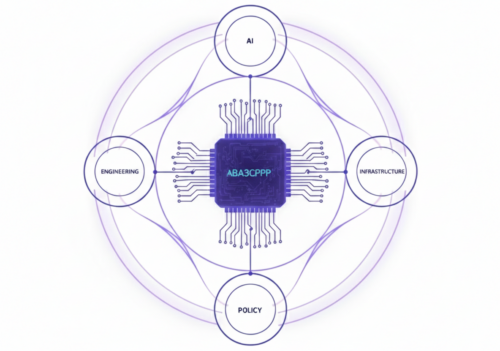
- AI Policy is scaling.
- Infrastructure is evolving.
- Policy is catching up.
- Engineering is modernizing.
This is not a trend cycle. This is structural evolution.
Three core shifts are happening:
-
- AI Is Becoming Operational Infrastructure: Not a feature. Not a tool. Infrastructure.
- Governments Are Actively Defining Digital Boundaries: Digital growth will operate inside structured frameworks.
- Scalable Systems Are Non-Negotiable: Performance at scale will separate leaders from followers.
- What Does This Means for Growth-Focused Businesses? At BuzzMora, we analyze events through one lens:
What does this mean for growth systems?
Here’s what 2026 is signaling:
- AI-native marketing strategies will outperform manual systems
- Data-driven personalization will dominate acquisition
- Infrastructure readiness will define campaign success
- Compliance-aware digital expansion will be essential
- Engineering strength will support marketing ambition
The companies attending these events are not spectators.
They are preparing for the next digital operating model.
The Competitive Reality of 2026
In 2024 and 2025, AI will have a competitive advantage.
In 2026, AI Policy becomes baseline expectation.
If you are not integrating:
- AI-driven analytics
- Automation pipelines
- Intelligent content systems
- Predictive customer modeling
You are competing against businesses that are.
And the gap compounds quickly.
BuzzMora Insight: The AI Policy + Infrastructure Era
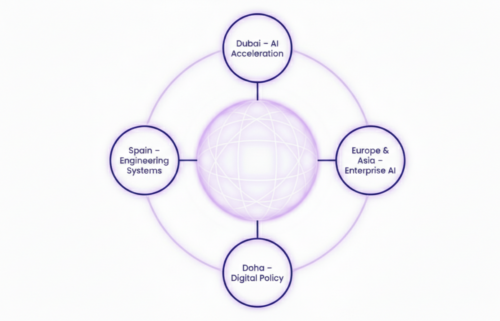
At BuzzMora, we don’t view these events as isolated gatherings.
We view them as directional signals.
Signals that:
- Growth is becoming systemized
- AI Policy is becoming embedded
- Policy is becoming structured
- Engineering is becoming foundational
The brands that win in this era will not be the loudest. They will be the most structured.
Because growth in 2026 is no longer about tactics. It’s about ecosystem design.
Final Takeaway – AI Policy 2026
One consistent message:
Technology is no longer accelerating in isolated lanes. AI, infrastructure, governance, and engineering are converging.
And convergence changes competitive landscapes faster than incremental innovation ever could. 2026 is not about experimenting with the future. It’s about building for it.
At BuzzMora, we’ll continue tracking the signals — and translating them into actionable growth strategies. Because visibility matters. But infrastructure wins.
FAQs – 2026 Global IT Events
1️. What are the most important IT events in 2026?
Some of the most notable IT events in 2026 include GITEX AI Asia in Dubai, the Microsoft AI Tour across Europe and Asia, the ITU Plenipotentiary Conference in Doha, and J On The Beach in Spain. These events focus on enterprise AI, digital infrastructure, telecom policy, and scalable engineering systems.
2️. Why are AI conferences in 2026 important for businesses?
AI conferences in 2026 highlight how artificial intelligence is shifting from experimentation to operational infrastructure. Businesses attending these events are learning how to integrate AI into marketing, automation, cybersecurity, and enterprise workflows to remain competitive.
3️. What is the significance of GITEX AI Asia 2026?
GITEX AI Asia 2026 signals rapid enterprise AI adoption in the Middle East and Asia. It focuses on scalable AI systems, smart city technologies, and government-led digital transformation initiatives.
4️. How does the Microsoft AI Tour impact enterprises?
The Microsoft AI Tour demonstrates how AI is becoming embedded in everyday enterprise tools like CRM systems, productivity software, and cloud platforms. It reflects the shift toward AI-native business operations.
5️. What is the ITU Plenipotentiary Conference and why does it matter?
The ITU Plenipotentiary Conference is a global telecom and ICT policy event that shapes digital infrastructure standards, data governance frameworks, and connectivity strategies. Its decisions influence global digital growth and compliance requirements.
6️. Why are engineering conferences still relevant in the AI era?
While AI dominates innovation discussions, scalable engineering remains essential. Conferences like J On The Beach focus on backend architecture, distributed systems, and cloud-native development — which enable AI systems to function reliably at scale.
7️. How will 2026 IT events shape digital marketing?
2026 IT events indicate that marketing will increasingly rely on AI-driven analytics, automation pipelines, predictive customer modeling, and infrastructure-backed personalization systems.
8️. What should businesses prepare for in 2026?
Businesses should prepare for AI integration at scale, stricter digital policies, infrastructure modernization, and competition driven by intelligent systems rather than manual processes.