Adobe Semrush Acquisition for $1.9B — The SEO Industry Just Entered Its AI Era
Adobe Semrush acquisitionfor $1.9 billion in cash has been officially announced, representing a significant move in the marketing technology sector. This isn’t merely about acquiring software; it’s a fundamental change in how visibility, search, and content marketing will function in an AI-driven landscape.
Semrush has been the go-to source for SEO data for quite some time now. It’s where you find information on keywords, track SERP trends, get the lowdown on backlinks, and see how your competition is doing.
Adobe, on the other hand, is a major player in content production and enterprise experience platforms. Together, they’re building something greater – a full-stack AI discovery ecosystem where information is created, optimized, distributed, and surfaced inside both search engines and AI response engines.
The strongest indication we’ve seen so far is that SEO is evolving into AI-driven search visibility. The landscape of ranking is fundamentally changing, and the old rules are being rewritten with Adobe Semrush Acquisition.
The Industry Shift: SEO → AEO → GEO
The Adobe–Semrush agreement underscores a shift that’s been quietly unfolding for a couple of years now: search isn’t just a one-and-done thing anymore.
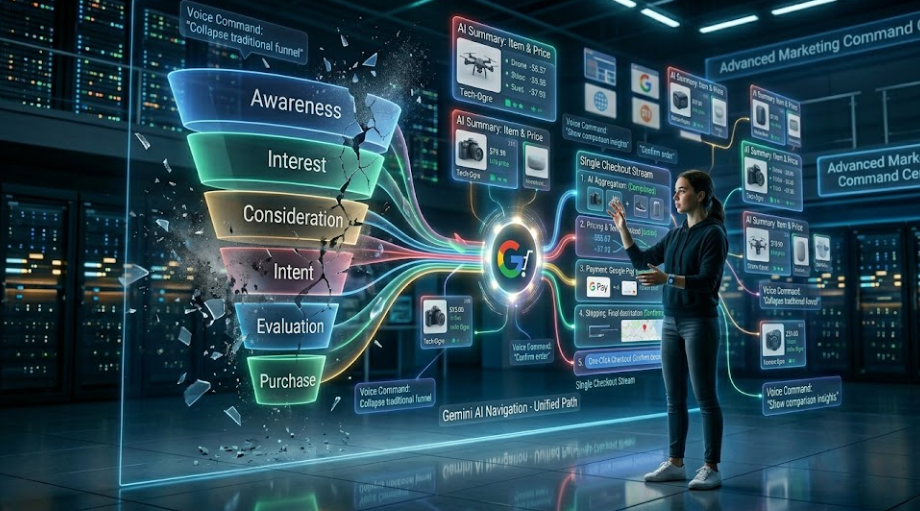
People aren’t simply “Googling” things anymore. They’re asking questions, giving commands, and exploring within a vast network of AI-powered platforms.

People today find answers through a variety of sources: ChatGPT, Perplexity, Gemini, and search assistants built into browsers. Voice agents in cars and homes also provide information, as do content recommendation engines on social media. These systems have outgrown their role as mere adjuncts to search; they’re fundamentally reshaping what we think of as “search engines.”
That’s precisely why Adobe is so interested in Semrush’s data. Visibility has expanded beyond the traditional search engine results pages, permeating various AI platforms in Adobe Semrush Acquisition.
Over time, traditional SEO indications, such as keyword density, the number of backlinks, and the use of H1–H3 headings, will likely become less important. AI algorithms don’t “rank results” in the same way Google once did. These systems generate responses by considering how well they understand entities, their expertise in a particular topic, their trustworthiness, the depth of the content, and how relevant it is across different formats.
Semrush’s dataset is where things get really interesting:
Semrush boasts a treasure trove of search intent data, content patterns, keyword clusters, SERP architecture, user behavior trends, and competitor visibility – some of the most comprehensive in the world.
Once embedded within Adobe’s AI offerings—Firefly, Adobe Express, and Experience Cloud—the company will gain the capacity to create and refine content that’s already optimized for AI-driven search engines.
In basic terms:
Adobe has effectively taken control of the entire process: from creating content, to optimizing it, to using AI for indexing, and finally, distributing it and tracking its visibility. Content won’t be just tailored for Google’s algorithms anymore.
It will be fine-tuned for:
- LLM interpretation
- AI summarization layers
- Multi-step reasoning systems
- Recommendation algorithms are everywhere these days.
- Zero-click answer engines.
Text, audio, video, and interactive summary – these are the outputs we’re looking at.
That’s where the actual change occurs.
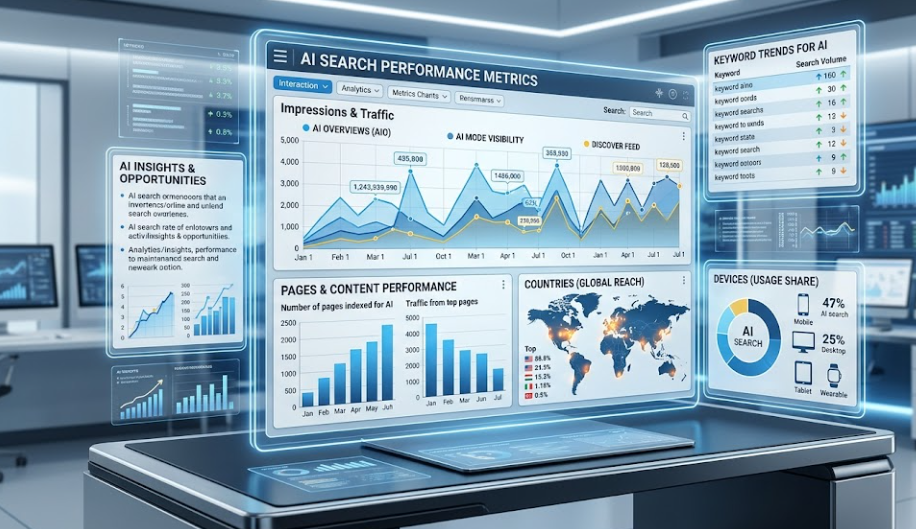
With Adobe Semrush Acquisition, Marketing teams will move away from traditional rank tracking and start monitoring “AI visibility scores.”
- Rather than focusing solely on a page’s keyword ranking, the new question is: Is our material showing up in AI-generated responses?
- Are large language models (LLMs) citing our brand as a source of expertise?
- Are AI systems willing to rely on our entity when generating summaries using our content?
- How well-known are we on platforms like ChatGPT, Gemini, Perplexity, and voice interfaces?
The progression has been from SEO to AEO, and now, GEO.

- SEO is all about climbing the search results ladder.
- AEO, or response Engine Optimization, is all about fine-tuning content to snag those coveted response boxes, snippets, and zero-click panels.
- GEO, or Generative Engine Optimization, is all about how AI models understand, utilize, and present your content as it happens.
This happens at every point where an AI system responds to a human query.
Adobe’s purchase of Semrush marks the start of a new chapter. It’s a shift away from the old ways of fighting for rankings. Now, success hinges on the power of entities, the strength of content ecosystems, AI-driven trust signals, and a strong, generative presence across multiple platforms.
The marketing world is shifting, and it’s happening at a pace that has caught many off guard.
Marketer POV — What This Means for Your Work
For marketers, this is the beginning of a new workflow.
- Content will be created with AI-first briefs.
- Optimization will shift from keyword density to entity maps.
- Visibility will depend on how well content is structured for LLM interpretation.
- And GEO (Generative Engine Optimization) will become a core requirement.
Every brand will need to understand:
- How AI systems interpret their content
- How to appear in AI summaries
- How to strengthen entity-level authority
- How to build multi-format content ecosystems that LLMs trust
This isn’t “the future.”
It’s already happening.
Buzzmora POV — The Opportunity for 2025 and Beyond
From Buzzmora’s vantage point, this acquisition confirms the direction we’ve been heading: the AI + Funnel + GEO era. SEO alone is no longer enough.
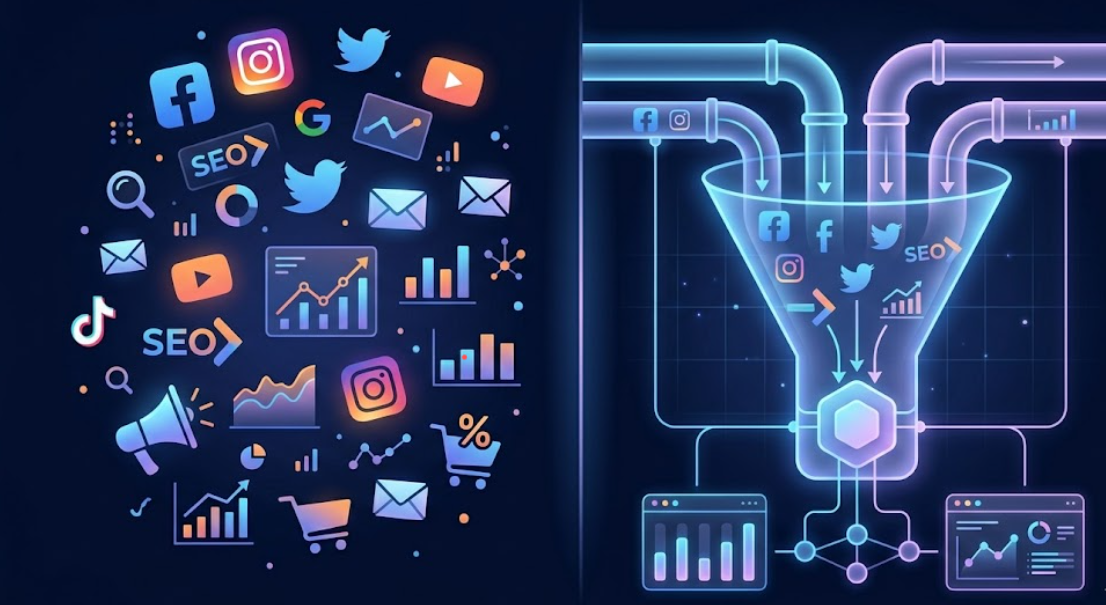
Brands must be seen via search engines, social media, AI-generated responses, and the various ways people discover things today. Buzzmora’s AI-powered funnel method effectively connects the dots, encompassing everything from content strategy and AI-driven optimization to ensuring visibility across several platforms.
This agreement signals a shift: agencies need to transform from simply offering “SEO services” to becoming AI Visibility Partners.
Brands are going to lean on specialists who can ensure they’re visible wherever customers are looking, inquiring, browsing, or engaging with content – and that means beyond just Google.
For Buzzmora, this presents an ideal opportunity to unveil:
- GEO Optimization Framework
- AI Visibility Mapping
- Creating material that’s easy for language models to understand.
Entity-based content clusters are groups of related information that focus on specific entities. These clusters help organize and present content in a way that highlights the connections between different pieces of information. By grouping content around particular entities, these clusters improve how users find and understand information. They also help search engines better understand the context of the content, which can improve search results with Adobe Semrush acquisition.
The market’s going to change fast, and those who get in early will have the advantage.
Predictions: What Happens Next With Adobe Semrush Acquisition
The next two years will redefine the marketing landscape.
- LLM visibility scores will become standard analytics — right next to traffic, CTR, and conversions.
- Answer Engine Optimization becomes essential as AI search panels replace traditional SERPs.
- Topical authority will matter more than backlinks as LLMs prioritize expertise-based content ecosystems.
- AI-driven content pipelines will replace manual editorial workflows.
- Adobe will bundle Semrush tools inside Creative Cloud and Experience Cloud, raising the industry standard (and likely, the cost).
The message is clear:
SEO as we know it is ending — and AI-native visibility is taking its place.
FAQs – Adobe Semrush Acquisition in 2025
1. Adobe’s acquisition of Semrush could have a big impact on the future of search engine optimization?
This is a departure from conventional SEO practices, moving instead toward visibility powered by artificial intelligence. The future of search will span large language models, response engines, and systems that integrate several modalities. This shift means that establishing entity authority and AI-driven indexing will become far more significant than simply focusing on keyword rankings.
2. Why should marketers care about this acquisition?
Marketers are now tasked with tailoring their content for AI helpers such as ChatGPT, Perplexity, and Gemini. As AI-generated responses evolve, the spotlight will shift. Visibility, rather than just search engine results page (SERP) rankings, will become the key metric.
3. How do SEO, AEO, and GEO differ from one another?
- SEO focuses on search engines.
- AEO centers on answer engines and zero-click outcomes.
- GEO focuses on how AI models analyze, summarize, and surface brand information across generative platforms.
4. Will traditional keyword rankings still be important?
Indeed, their significance will diminish. The most important factors for AI systems when deciding what content to show will be based on visibility signals that prioritize the entity’s power, the depth of the issue, its authority, and its trustworthiness.
5. How does Semrush help Adobe’s AI tools?
Semrush’s wealth of experience in search intent, keyword clusters, user behavior, and competition analysis provides Adobe’s AI models with the essential data needed to refine content for both search engines and large language models.
6. Will businesses need to change their strategies for AI-driven search?
Absolutely. Brands must establish rich content ecosystems, structured data, entity-based clusters, and multi-format assets that AI systems can trust and utilize in their answers.
7. What is AI visibility, and why does it matter Adobe Semrush acquisition?
AI visibility gauges the frequency and precision with which your brand is mentioned in AI-generated content. As artificial intelligence-based search engines replace traditional search methods, this will become the main way people find brands online.
8. How will Adobe incorporate Semrush into its existing system?
Adobe plans to integrate Semrush data across its platforms: Experience Cloud, Firefly, and content workflows. This move will provide a fully automated pipeline for AI-driven content creation, optimization, and dissemination.
9. How will this acquisition impact the cost of the tools?
Probably. Adobe prefers to integrate features into premium suites, so Semrush’s advanced technologies may someday become part of higher-tier Adobe subscriptions.
10. Brands need to act quickly to stay ahead of the game?
Start preparing for GEO: develop topical authority, improve entity signals, generate multi-format content, optimize for AI responses, and approach AI visibility as a primary performance indicator.