

Introduction – OpenAI Sora Shuts Down
OpenAI’s decision to shut down Sora marks a significant moment in the evolution of artificial intelligence. What once appeared to be the future of content creation has now been repositioned as a transitional phase in a much larger technological shift. Sora was not just another AI tool; it represented a breakthrough in how machines could interpret language and translate it into cinematic, realistic video outputs. Its shutdown signals a deeper reality about the direction AI is heading—away from standalone creative tools and toward integrated, infrastructure-driven intelligence systems that power entire ecosystems.

The Rise of Sora — From Innovation to Cultural Moment
Sora emerged as one of the most advanced text-to-video models ever introduced, capable of generating highly realistic, narrative-driven video clips from simple prompts. It quickly gained global attention because it bridged a gap that had long existed between imagination and execution. For marketers, creators, and businesses, it unlocked the ability to produce visual storytelling at scale without traditional production constraints.
The platform’s rapid adoption reflected a broader trend in AI where accessibility and capability converged. Within a short period, Sora transitioned from a research demonstration into a widely discussed creative platform, influencing industries ranging from advertising and entertainment to education and product visualization. It became symbolic of a new content economy where speed, personalization, and automation redefined how visual media was produced.
Why OpenAI Sora Shut It Down — A Strategic Reallocation, Not a Failure
The discontinuation of Sora is not a reflection of technological limitations but rather a strategic decision rooted in economics, infrastructure, and long-term positioning. Video generation at scale demands immense computational resources, making it one of the most expensive categories in AI. As the industry matures, companies are being forced to prioritize systems that deliver sustainable value rather than viral engagement.
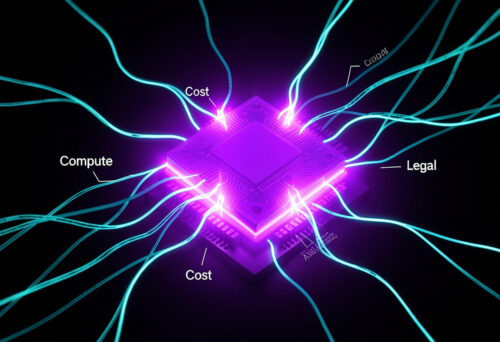
OpenAI’s broader direction is shifting toward enterprise-grade intelligence systems, developer ecosystems, and AI models that integrate deeply into workflows rather than operate as isolated products. Sora, despite its capabilities, functioned largely as a standalone experience. In an environment where unified platforms and multi-modal systems are becoming dominant, maintaining separate applications becomes inefficient both operationally and strategically.
Additionally, the legal and ethical complexities surrounding AI-generated video—particularly around copyright, likeness, and misuse—have introduced friction that slows down large-scale commercialization. These factors collectively contributed to a decision that aligns more with long-term infrastructure priorities than short-term product success.
The Transition of Sora Technology — From Content to Simulation
Although OpenAI Sora as a platform is being discontinued, its underlying technology is not being abandoned. Instead, it is being redirected toward more foundational applications such as simulation, robotics training, and environment modeling. This shift highlights an important transformation in AI: the movement from visible outputs to invisible intelligence layers.
Video generation, in this context, becomes less about producing content for users and more about enabling machines to understand and interact with complex, dynamic environments. The same capabilities that allowed Sora to generate realistic scenes can now be used to train AI systems in ways that were previously not possible. This reallocation reflects a broader industry trend where AI capabilities are being embedded into systems rather than presented as standalone products.
Alternatives in the AI Video Space
The shutdown of OpenAI Sora does not signal the end of AI video generation. Instead, it opens the market to a more distributed ecosystem of tools, each focusing on specific use cases. Platforms like Google’s Veo are advancing cinematic video generation with deep ecosystem integration, while tools such as Runway and Pika Labs are focusing on creator workflows and rapid content production. Stability AI continues to push open-source approaches, enabling developers to build customized video solutions.

This fragmentation indicates that the market is moving away from a single dominant tool toward a layered ecosystem where different platforms serve different needs. Some will prioritize enterprise-grade production, others will focus on social content, and a few will operate as infrastructure providers behind the scenes.
BuzzMora POV — The Real Shift Behind the Shutdown
From a BuzzMora perspective, the shutdown of Sora is not about the decline of AI video but about the maturation of AI as an industry. The first phase of AI was driven by demonstration—tools that showcased what was possible and captured attention through novelty. Sora belonged to this phase, where the focus was on creative breakthroughs and viral adoption.
The second phase, which the industry is now entering, is defined by systems thinking. AI is no longer evaluated by how impressive it looks but by how effectively it integrates into business processes, reduces operational friction, and drives measurable outcomes. In this context, content generation becomes a feature within a larger system rather than a standalone product.
For marketing and digital strategy, this shift has significant implications. The future will not revolve around tools that create content on demand but around systems that automatically generate, distribute, optimize, and measure that content across the entire funnel. Video will still play a critical role, but it will increasingly be produced as part of automated workflows rather than manual prompts.
Another key insight is the growing importance of platform consolidation. Standalone tools, no matter how advanced, struggle to survive unless they are part of a broader ecosystem. The companies that will dominate the next phase of AI are those building integrated platforms where multiple capabilities—text, image, video, analytics, and automation—work together seamlessly.

Finally, the shutdown highlights the central role of compute and economics in shaping AI’s future. Not every technically impressive product is commercially viable at scale. Sustainable AI will be defined by efficiency, monetization potential, and its ability to deliver consistent value in real-world applications.
Final Take
Sora’s lifecycle, from breakthrough innovation to strategic shutdown, reflects the rapid evolution of artificial intelligence. It demonstrated what was possible in AI-generated video, but it also revealed the limitations of standalone creative tools in a system-driven future. The industry is moving toward integrated intelligence, where capabilities are embedded into platforms and workflows rather than offered as isolated experiences.
The next wave of AI will not be defined by individual tools but by the systems that connect them. In that reality, video generation will remain important, but it will operate quietly in the background as part of a much larger, more powerful infrastructure.