

17 AI Hacks That Save Professionals 10+ Hours a Week
You’re already using AI hacks for productivity 2026. But you’re probably leaving 10 hours on the table every single week.
Most professionals treat AI like a search engine — type a question, get an answer, close the tab. That’s not AI adoption. That’s AI tourism.
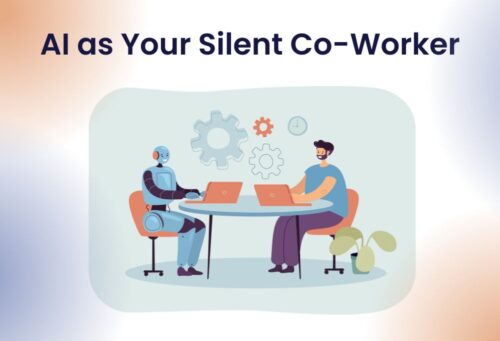
The professionals winning have built AI hacks for productivity 2026 into their daily workflows as a silent co-worker — one that drafts, researches, summarizes, schedules, and executes while they focus on thinking and decisions.
This isn’t a list of tools. This is a system. Here are 17 battle-tested AI hacks professionals are using right now to reclaim double-digit hours every week.
Why Most People Waste AI’s Potential?
Before the hacks, understand the problem.
The average knowledge worker spends 28% of their workweek managing email, 20% searching for information, and another 15% on repetitive documentation tasks. That’s over 60% of your week on work that AI hacks for productivity 2026 can absorb — partially or fully.
The gap isn’t tool access. It’s workflow integration. Most people use AI reactively (when stuck) instead of proactively (as a system layer).
The professionals below flip that equation entirely.
AI hacks for productivity 2026 for Communication and Email
Hack #1 — Train AI on Your Voice Once, Use It Forever
Write 3–5 examples of your best emails. Paste them into ChatGPT or Claude with the prompt: “This is how I write. Mirror this tone, structure, and vocabulary for all future email drafts.”
Now every email draft you generate sounds like you — not like a generic AI hacks for productivity 2026. Time saved: 45–60 minutes/day for high-volume communicators.
Hack #2 — The “One-Sentence Brief” Email Method
Stop writing email prompts like paragraphs. Instead, feed AI hacks for productivity 2026 one sentence of context + the outcome you need.
Example: “Client delayed payment. Write a firm but professional follow-up that protects the relationship.”
You’ll get a draft in 8 seconds. Edit in 30. Send in 60.
Hack #3 — Inbox Zero with AI Triage Summaries
Paste your inbox thread into Claude and ask: “Summarize this thread in 3 bullet points. Identify the action item and the decision needed from me.”
For heavy email days, this alone saves 45 minutes.
AI Hacks for Research and Information Processing
Hack #4 — The “Pre-Meeting Intelligence Brief”
Before any client call or important meeting, ask AI: “I’m meeting [type of person/company] about [topic]. Give me 5 things I should know, 3 questions I should ask, and 2 risks I should prepare for.”
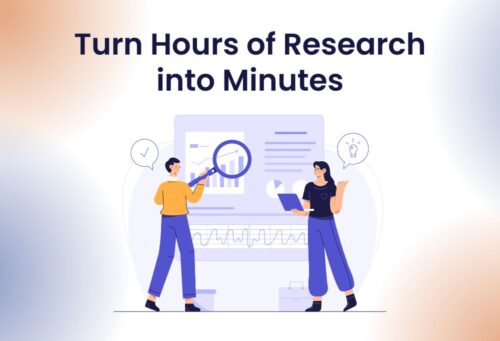
Fifteen seconds of prompting replaces 30 minutes of manual prep.
Hack #5 — Summarize Long Documents in Seconds
Upload a PDF, paste a report, or drop in a URL and ask: “Summarize this in 5 bullets. Pull out the key numbers, claims, and action points.”
Research that used to take an hour becomes a 3-minute skim-and-verify task.
Hack #6 — Build a Personal AI Knowledge Base
Create a running document of your company’s SOPs, brand voice, client details, and recurring frameworks. Paste it as context at the start of any AI session. Now your AI hacks for productivity 2026 responds like it actually knows your business.
This is how power users turn general AI into a custom team member.
AI hacks for productivity 2026 for Content and Writing
Hack #7 — The Repurposing Flywheel
Write one long-form piece — article, report, or email. Then prompt: “Repurpose this into: a LinkedIn post, a Twitter thread, a 3-email sequence, and a 60-second script.”
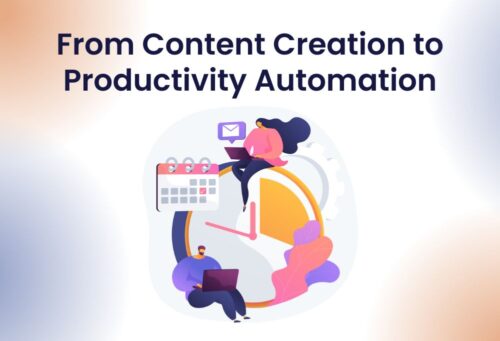
One piece of content becomes five. One hour of writing becomes a week of content.
Hack #8 — First Draft in 4 Minutes
Stop staring at blank pages. Give AI hacks for productivity 2026 your outline, your point of view, and your target reader. Ask for a rough first draft. It won’t be perfect — it doesn’t need to be. Your job is to edit, not originate. Editing is 3x faster than writing from scratch.
Hack #9 — The Headline Multiplier
Generate 20 headline variations for any blog, email subject, or social post in under 60 seconds. Pick the best three. Test two. Kill the loser. This habit alone improves click-through rates by 20–40% for most content marketers.
AI hacks for productivity 2026 for Planning and Productivity
Hack #10 — Weekly Planning in 10 Minutes Flat
Every Monday morning, paste your task list, goals, and calendar into AI hacks for productivity 2026 and ask: “Create a prioritized weekly plan. Identify what to drop, delegate, or defer. Block focus time for deep work.”
This replaces a 45-minute planning session with a 10-minute AI-assisted one.
Hack #11 — The “Anti-Procrastination Prompt”
When you’re stuck or avoiding a task, type: “I need to [task]. I’ve been avoiding it because [honest reason]. Break it into the smallest possible first step I can do in under 5 minutes.”
AI doesn’t judge. It just gives you the first step. And first steps kill procrastination.
Hack #12 — Automate Your EOD Report
At the end of every workday, paste your task notes into AI hacks for productivity 2026: “Turn these rough notes into a clean EOD report with Done and Carry Forward sections. Keep it under 150 words.”
What used to take 20 minutes takes 90 seconds.
AI hacks for productivity 2026 for Analysis and Decision-Making
Hack #13 — The Devil’s Advocate Prompt
Before making any major decision, ask AI: “Here’s my plan: [plan]. Now argue against it. Give me the 5 strongest reasons this could fail.”
This stress-tests your thinking without requiring a second person in the room.
Hack #14 — Competitive Intelligence on Demand
Prompt: “Analyze [competitor name] based on what you know about their positioning, messaging, and customer complaints. What gaps are they leaving open?”
Five minutes of AI research replaces two hours of manual competitor analysis.
Hack #15 — Data Interpretation Without a Data Analyst
Paste a table, spreadsheet export, or metrics summary and ask: “Interpret this data. What’s performing, what’s declining, what’s the outlier, and what should I act on first?”
Non-technical professionals now have access to analyst-grade interpretation on demand.
Advanced AI hacks for productivity 2026 for Power Users

Hack #16 — Chain Your Prompts Like a Workflow
Instead of one big prompt, break complex tasks into a chain:
- Step 1: “Research X”
- Step 2: “Now structure it as an outline”
- Step 3: “Now write section 2 in detail”
- Step 4: “Now add a POV summary at the end”
Chained prompts produce dramatically better output than single-shot mega-prompts.
Hack #17 — Build Reusable Prompt Templates
Your best prompts are assets. Save them. Build a personal prompt library in Notion, a Google Doc, or even a simple text file. Categorize by task: Writing, Research, Planning, Analysis, Communication.
Every time you build a great prompt, you’re building infrastructure — not just doing a one-time task.
POV — The Real Unlock Isn’t the Tool, It’s the Habit
At BuzzMora, we work with marketing teams and business operators who’ve gone from using AI occasionally to building it into every layer of their workflow.
The consistent finding: the ROI isn’t in the tool. It’s in the habit architecture around the tool.
AI works best when it’s pre-loaded with your context, used proactively before tasks rather than reactively after frustration, and treated like a workflow layer — not a search bar.
The professionals saving 10+ hours weekly aren’t using better tools. They’re using the same tools with better systems.
That’s the real hack.
Frequently Asked Questions – AI Hacks for Productivity 2026
Q1: How much time can AI realistically save professionals each week?
Research and user-reported data suggest that professionals who integrate AI into daily workflows save between 8 and 15 hours per week. Time savings vary based on role, volume of repetitive tasks, and how systematically AI is embedded — occasional users save far less than those with structured prompt habits and workflow automation.
Q2: What are the best AI tools for daily professional use in 2026?
The most widely used AI tools for professional productivity in 2026 include ChatGPT (general tasks and writing), Claude (reasoning, analysis, and long-form content), Notion AI (knowledge management), and Perplexity (real-time research). The best tool depends on your workflow — most high-performing professionals use two to three tools in a coordinated system.
Q3: How do I get better results from AI prompts?
Better prompts follow a simple structure: context + task + format + constraint. Tell the AI who you are, what you need, how you want it structured, and any limitations. Providing examples of your tone or past work dramatically improves output quality. Chaining prompts — breaking tasks into steps — also outperforms single large prompts.
Q4: Can AI replace human judgment in decision-making?
No. AI is most effective as a thinking partner, not a decision-maker. It accelerates research, surfaces patterns, stress-tests reasoning, and removes friction from execution — but final judgment, especially in high-stakes decisions, still requires human accountability, ethical reasoning, and contextual authority that AI cannot replicate.
Q5: Is AI usage safe for confidential business information?
It depends on the platform and your organization’s policies. Most major AI platforms have enterprise versions with data privacy protections. As a rule, avoid pasting sensitive client data, proprietary financials, or personally identifiable information into public-facing AI tools. Use enterprise tiers, local models, or platform-specific privacy settings for sensitive workflows.
Q6: How do I start building an AI workflow if I’m a beginner?
Start with one repetitive task you do daily — email replies, meeting notes, or weekly planning. Build one prompt that handles that task well. Use it for two weeks. Then add the next task. Building incrementally creates lasting habits. Trying to automate everything at once typically leads to tool abandonment within 30 days.
Q7: Do I need technical skills to use AI for productivity?
No. The most impactful AI productivity tools require zero coding or technical knowledge. Clear, specific language and good prompt structure are the only skills required. Most professionals see significant results within the first week of intentional daily use, without any technical background.