Agents, Zero-Click Growth & Emotion-Based Targeting Are Reshaping
Not only is marketing changing, but it’s also being rebuilt.
The old way of doing campaigns, manually optimizing, static branding, and using past data funnels is falling apart.
A new ecosystem is taking its place, zero click growth, and it is powered by AI agents that work on their own, predictive funnels, zero-click conversion journeys, and brand identities that change in real time.
1. AI Agents Take Care of Small Tasks By Themselves:
AI agents are not just helping with marketing in zero click growth; they are also running it all the time, intelligently, and on their own. These agents do not take the place of marketers. They take the role of manual labor, which is the repetitive, tedious, operational work that used to take up hours of creative time.
Here’s how each kind of AI agent is changing the way we market today:
- AI content agents → write, improve, and plan content. AI research agents look at rivals, trends, and how people act.
- AI ad agents automatically → change budgets and creative options.
- AI analytics agents → find patterns and send alerts about unusual behavior
Why It Matters:
Your marketing is always on, reading data every second and changing campaigns before people even notice a change.
BuzzMora POV:
This is the start of “self-optimizing funnels.” Funnelism and AI agents work together to make performance better on their own.
2. The New Battleground is Zero Click Growth:
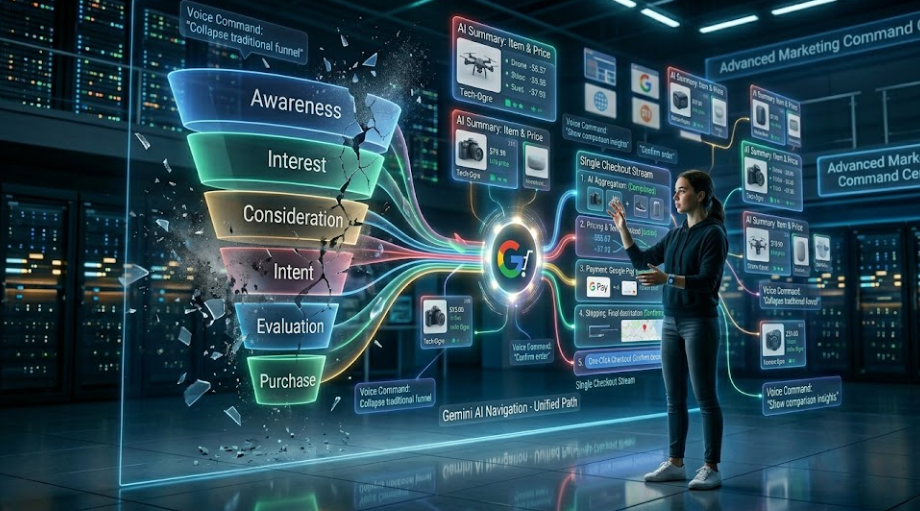
The internet is changing from online browsing to user journeys that are housed within platforms. To retain people inside their ecosystems and not on other websites, Google, TikTok, Meta, and LinkedIn are all reinventing the digital experience. In 2025–2026, conversion happens where the user is paying attention, not where the company wants them to go. This change is huge in zero click growth.
Zero click growth content is no longer just a way to get people to read your content; it’s a way to get them to buy something.
Marketer’s POV:
- TikTok Shop lets you buy everything without going to a website.
- AI shopping in Instagram DMs
- Google’s AI overviews are lowering the number of clicks going out.
- LinkedIn’s lead-gen forms are better than websites
BuzzMora POV:
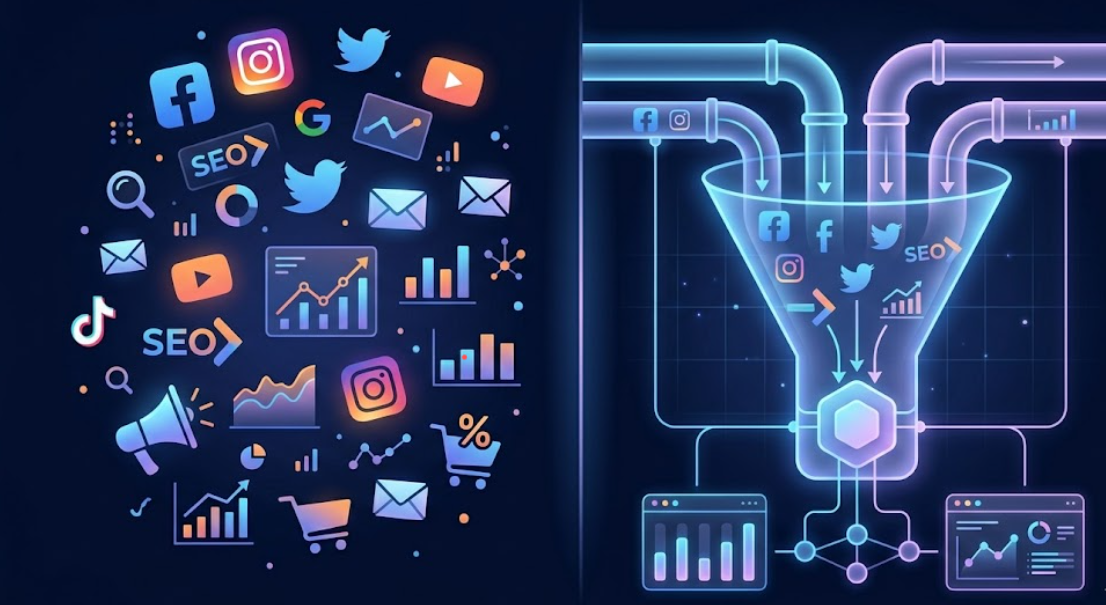
Brands need to improve funnels that are native to the platform, not just websites. Funnelism 2.0 = a website, platform funnels, and AI-driven content cycles.
3. Targeting Emotion Goes AI Algorithms Are Now Able To Find And Target Emotional Cues:
- Tone, feeling, and purpose
- Micro-expressions in videos
- Emotional groups in comments
- Personalization based on mood

When To Use:
- Fashion brands that run marketing depending on how people feel about themselves
- SaaS providers looking for “frustration signals” to start free trials
- E-commerce changing the way products are displayed based on how customers feel
BuzzMora POV:
Emotion is the new way to target people. Brands that make emotional funnels and emotional identity will be the best in zero click growth.
4. Predictive Funnels Take The Role of Static Funnels:
Fixed roadmaps zero click growth are like traditional funnels. A user starts at the top, goes down stages that have already been set up, and reaches conversion if the trip fits their behavior. That world is gone.

Today, predictive funnels make the whole experience better by using real-time behavioral signals to change the route as it happens. Landing pages that don’t change are no more. No more calls to action that work for everyone. No more guesswork.
Marketing POV:
Live signals are used in predictive funnels:
- How far down you scroll
- The goal of the session
- Behavior in the past
- Patterns of search
- Signals for brand recall
For example:
Pages that automatically produce landing pages:
- Adaptive CTAs
- Dynamic retargeting based on small motions
- Email triggers based on behavior clusters that can be predicted
BuzzMora POV:
This is real Funnelism, where each stage changes, learns, and grows. AI guesses where the user will go next and sends them the next step ahead of time zero click growth.
5. Search Reinvents Itself With “Queryless Discovery”
Platforms like Google, TikTok, Meta, Perplexity & ChatGPT are shifting toward prediction-based discovery:
- Users browse before they search
- Algorithms surface results before intent is explicit
- AI Overviews answer without clicks
This changes SEO forever.

New AEO Reality:
You no longer optimize for queries — optimize for context, entities, and relevance clusters. BuzzMora’s AEO-first workflow fits perfectly into this new paradigm.
6. Brand Identity Now Intersects With Generative Creative Systems
Branding used to be a set of rules that couldn’t be changed zero click growth: colors, typefaces, grid system, images, and logo lockups were all set in stone. But branding in 2025 and 2026 will be done by adaptive AI systems that change images based on the platform, user behavior, context, and campaign goals.
A brand is no longer just a set of rules; it becomes a living thing.
This is what the change looks like:
- Color grading that changes with the scene
- Smart templates for graphics that are always the same but change over time
- AI-generated UGC that tells a brand’s story better
- Creative changes that happen in real time on diverse platforms
BuzzMora’s POV:
Branding turns into a live system in zero click growth. Identity, AI, and funnelism together make storytelling that is scalable, innovative, and consistent.
FAQs: Zero Click Growth
Q1: How do AI agents make marketing more effective?
AI agents zero click growth do small chores and make things better all the time, which saves time and makes things more accurate.
Q2: What does “zero-click conversion” mean?
A user changes their mind about something on the platform (LinkedIn, Instagram, TikTok) without going to a website in zero click growth.
Q3: What does it mean to target based on emotions?
AI models change the message according on how the user feels, what they say, or how they act zero click growth.
Q4: What do predictive funnels do?
They change in real time based on user signals, guessing what the next step will be and changing the UX/content to fit.